Africa Victoria Falls map
Imagine gazing at an Africa Victoria Falls map and plotting a journey to one of the most awe-inspiring natural wonders on Earth. Known locally as Mosi-oa-Tunya, or “The Smoke That Thunders,” this bucket-list destination represents the untamed beauty of the natural world. But before you pack your bags, you need to understand the lay of the land.
If you are wondering what continent is Victoria Falls in, it is proudly situated in the heart of Africa. To truly grasp its majesty, we must dive deep into where is Victoria Falls located, its staggering dimensions, and how to plan the perfect trip to this world-renowned marvel.
Where is Victoria Falls Located?
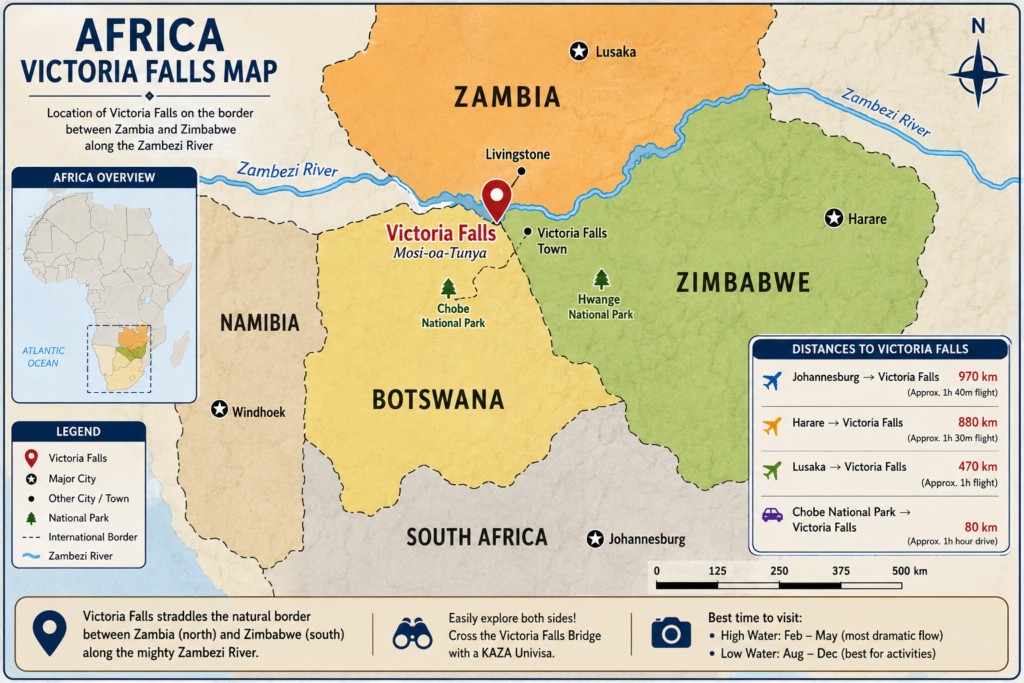
When trying to pinpoint exactly where is Victoria Falls located on a map, look directly to Southern Africa. If you have ever asked, “what country is Victoria Falls in Africa?” or simply “what country is Victoria Falls in?”, the answer is uniquely twofold. The falls straddle the natural border between two distinct nations: Zambia and Zimbabwe.
Looking closely at a Zimbabwe Victoria Falls map, you will find the bustling town of Victoria Falls situated on the southern bank of the Zambezi River. Across the river lies Victoria Falls Livingstone Zambia, a historic town serving as the gateway to the Zambian side of the falls. So, to answer the common queries of “where is Victoria Falls Africa?” and “where is Victoria waterfall?”—it sits perfectly between these two welcoming countries. Finding Victoria Falls on map coordinates reveals a lush region that is teeming with diverse wildlife and breathtaking landscapes.
If you are asking where is Victoria Falls Zambia specifically, it occupies the northern side of the Zambezi River. Meanwhile, Victoria Falls Zimbabwe Africa holds the southern views.
The Scale: How Big is the Victoria Falls?
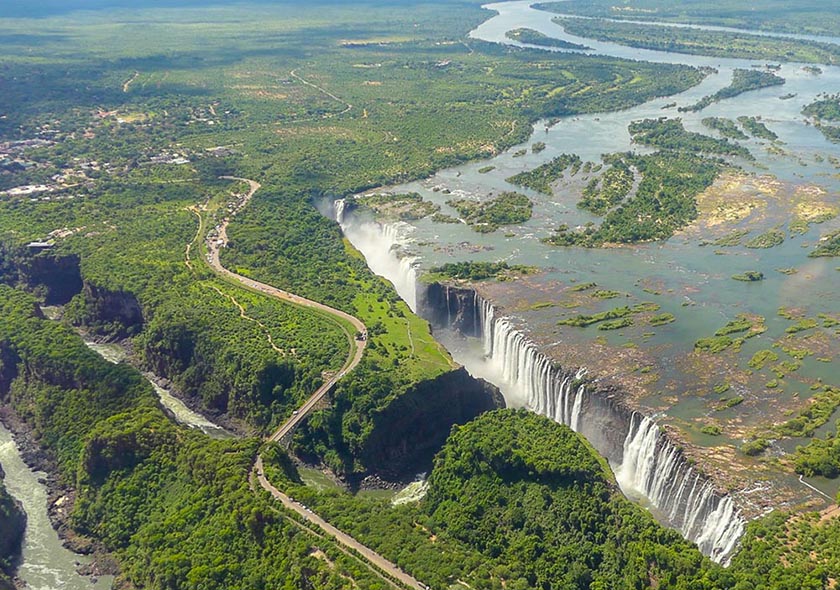
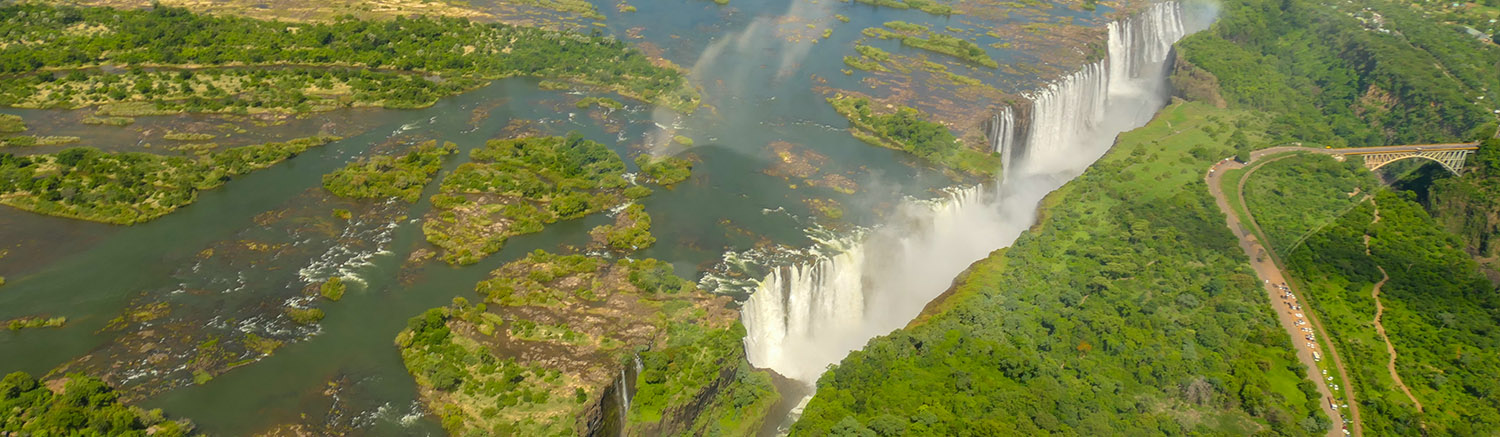
As the largest waterfall in Africa—and widely considered the largest single sheet of falling water in the world—its scale is mind-boggling. But exactly how big is the Victoria Falls?
When looking at Victoria Falls compared to Niagara Falls dimensions, the African giant is roughly twice the height and significantly wider than its North American counterpart.
- How tall is the Victoria Falls? The impressive Victoria Falls height varies slightly along the jagged gorge but drops an astounding 108 meters (354 feet) at its deepest point.
- How high is the Victoria Falls in context? Imagine a 35-story skyscraper composed entirely of raging, roaring water!
Why is Victoria Falls Famous?
You might wonder why is Victoria Falls important beyond its size. Aside from being the most famous of all the waterfalls in Africa (sometimes affectionately referred to by Dutch and Afrikaans-speaking visitors as the Victoria waterval), it holds immense ecological and geographical significance. The fascinating geological formation of the Batoka Gorge showcases millions of years of tectonic shifts, with the Zambezi River steadily carving its way through dense basalt rock.
Here are 10 facts about Victoria Falls to fuel your wanderlust:
- Scottish missionary David Livingstone was the first European to view the falls in 1855.
- He named it in honor of his monarch, making the mighty Victoria Falls Victoria’s most iconic natural namesake.
- The indigenous Lozi name, Mosi-oa-Tunya, perfectly describes the rising spray that can be seen from miles away.
- It is one of the Seven Natural Wonders of the World.
- During peak season, over 500 million liters of water plummet over the edge every minute.
- The falls are approximately 1,708 meters (5,604 feet) wide.
- A unique ecosystem exists in the surrounding rainforest, sustained entirely by the waterfall’s spray.
- Interesting facts about Victoria Falls in Zimbabwe include the presence of unique plant species like the wild date palm.
- The site was designated a UNESCO World Heritage site in 1989.
- It forms the largest curtain of falling water on the globe.
These Victoria Falls facts highlight exactly why it remains a premier destination for global travelers.
Zambia Versus Zimbabwe Side Perspective
When planning a trip, visitors often debate the Zambia versus Zimbabwe side perspective. The Zimbabwean side boasts about 75% of the viewpoints, making it a year-round visual spectacle. Here, you can enjoy the lush walking trail route through Victoria Falls Rainforest, which offers uninterrupted panoramas of the Main Falls.
Zambia, on the other hand, offers exceptionally thrilling, up-close experiences. The good news is that you do not have to choose just one. Navigating the Victoria Falls Bridge border crossing is a seamless process, especially if you purchase a KAZA Univisa upon arrival, allowing you to walk or drive between the two countries in a single afternoon. When visiting the Zambian side, the Mosi-oa-Tunya National Park entrance locations are easily accessible just a short drive from Livingstone town.
Must-Do Activities and Viewpoints
For thrill-seekers, the Livingstone Island and Devil’s Pool access points provide a once-in-a-lifetime chance to swim right at the very edge of the abyss (only safely accessible during the dry season).
Photographers will want to scout the panoramic viewpoints for Victoria Falls photography, such as Danger Point and the Boiling Pot. If you are visiting during a full moon, you must seek out the optimal spots for viewing the lunar rainbow, a rare natural phenomenon where the moonlight refracts through the waterfall’s spray. Finally, for a bird’s-eye perspective, the helicopter flight paths over the Zambezi River offer what is famously known as the “Flight of Angels,” granting an unforgettable view of the surrounding gorges.
Practical Logistics and Planning
Mastering the logistics for visiting Victoria Falls Town requires a bit of seasonal planning. First, you must consider the Zambezi River water levels by month. High water (February to May) delivers the most dramatic spray and thundering sounds, though visibility can be obscured by the mist. Low water (August to December) is required for activities like white-water rafting and swimming in Devil’s Pool.
Getting there is surprisingly straightforward. There are daily flight routes from Johannesburg to Victoria Falls (VFA in Zimbabwe and LVI in Zambia), making it highly accessible for international tourists.
Additionally, animal lovers should take advantage of the proximity of Victoria Falls to Chobe National Park in neighboring Botswana. Just an hour’s drive away, Chobe is renowned for its massive elephant herds, making it the perfect add-on to your waterfall adventure.
Conclusion
Whether you are scanning an Africa Victoria Falls map to plan your itinerary or simply daydreaming about the vast waterfalls in Africa, knowing exactly where is Victoria Falls located in Africa is the first step to an epic adventure. With its staggering height, rich history, and thrilling border-crossing excursions, Victoria Falls stands as a monument to nature’s ultimate power. Plan your travel dates, pack a good raincoat for the spray, and prepare to be humbled by the sheer magnitude of The Smoke That Thunders.